A Rainy Afternoon with One Shared Game
A rainy afternoon with one shared game can bring everyone together without filling the day: choose a welcoming game, make a comfortable place, and let time stay open.
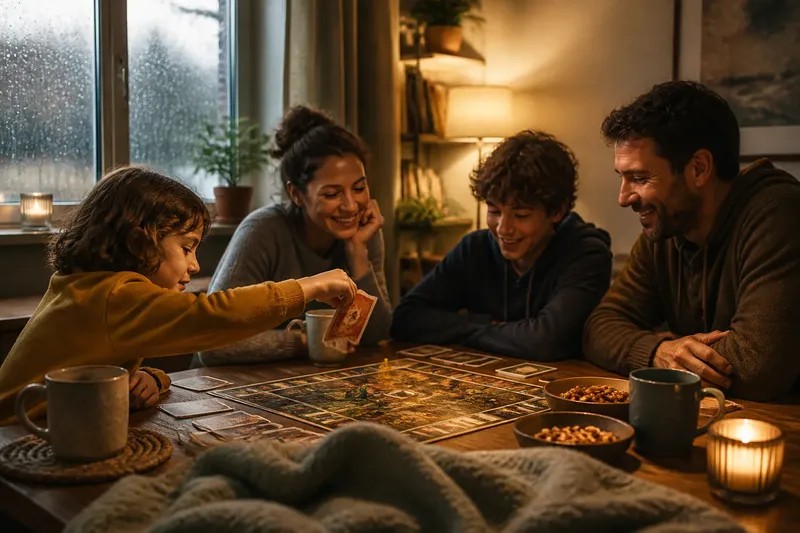
Rain taps the kitchen window while someone sets a mug of tea beside a stack of cards. A rainy afternoon with one shared game does not need a full schedule or a perfect crowd; it needs a game people can join, a place where they can settle, and room for the day to change.
How do you choose one game for a mixed group?
Choose a game by asking what people will enjoy doing together, not by searching for one that suits every age or personality equally. For a group with different attention spans, a familiar card game or cooperative board game can be easier to enter than one with a long explanation or a narrow winning strategy.
Consider the group’s energy and the space available. A word game works well around a small table and needs little equipment. A tile game may suit people who like quiet concentration. A cooperative game can soften the pressure to compete, while a light strategy game may appeal to a group that enjoys planning.
- Look at the group: Are people eager to talk, focus quietly, or move around?
- Check the rules: Can someone explain the basic turn in a sentence or two?
- Consider joining late: Can a person come in without disrupting a long round?
- Notice the setting: Will pieces fit on the table, and can everyone see them?
- Choose for the mood: If the room feels tired, pick something relaxed rather than demanding.
Say you have two adults, a teenager, and a younger child who is restless after being indoors. You might choose a cooperative game with short turns and a shared goal, then let the child handle a visible task such as drawing a card. The expected result is a way for everyone to participate without making the youngest player sit still for a long stretch.
Should you choose a familiar game or learn a new one?
Choose a familiar game when the group wants to start quickly; choose a new one when learning together sounds enjoyable rather than like homework. Familiar rules leave more room for conversation, while an unfamiliar game can give the afternoon a small shared discovery.
If you pick something new, read the rules before gathering everyone. Sort the pieces and identify the first action, but do not turn preparation into a full lesson. Explain the aim, demonstrate one turn, and let the group consult the rule sheet as questions arise. For a game with many exceptions, consider a shorter introductory round if its rules allow it.
A well-loved game can also be adjusted socially without altering its formal rules: let people take a pause between rounds, or invite someone to watch before deciding whether to join. The point is not to make everyone play in the same way. It is to offer a shared activity that can hold both conversation and quiet attention.
Where should you set up the game?
Set up where people can sit comfortably, reach the pieces, and leave without squeezing past one another. A dining table is convenient, but a coffee table with floor cushions can feel more relaxed if the game does not require a high surface or careful handling.
Clear only the space the game needs. Move mail, chargers, or a fruit bowl to a nearby shelf, then leave water and snacks within reach but outside the playing area. A soft lamp can help on a gray afternoon; if the room is already bright enough, there is no need to rearrange it.
Make joining and leaving easy. Keep a spare chair nearby, leave a clear path to the kitchen or bathroom, and avoid placing the game where a household task must constantly interrupt it. These modest choices make the gathering feel available rather than staged.
How do you keep the afternoon open?
Let the game be an invitation, not an appointment with a fixed finish time. You can say, “I’m setting this out if anyone wants to play,” and begin when the group is ready. That wording gives people room to finish what they are doing, join after a while, or simply sit nearby.
Keep the afternoon flexible by avoiding a chain of planned activities. One game may lead to a second round, a conversation, a snack break, or an early stop. If someone needs to leave, finish the current turn or round when practical, then let the rest decide whether to continue.
Open time does not mean ignoring people’s limits. A player who is tired may prefer to watch, and someone who does not like competition may enjoy keeping score or reading a card aloud. Offer these roles casually; no one needs to justify declining a turn.
What if people have different ages or attention spans?
Choose a game with clear turns and a pace that allows people to drift in and out. Simple word games, picture-based games, and familiar card games can offer several ways to take part, though the right fit depends on the players and the particular game.
For younger children, keep small pieces away from anyone who might put them in their mouth, and choose a suitable activity for the children present. If a game’s packaging or instructions give age guidance, use it when deciding whether the game fits the group.
For a person who prefers less social focus, let participation stay low-pressure: they might watch a round, deal cards, or join only when ready. A shared afternoon can include different levels of involvement without making anyone’s choice the center of attention.
What should you do when the game loses its appeal?
Stop when people are ready to stop. The group can finish the current round, put the pieces away together, and leave the remaining afternoon unassigned. If one person still wants to play, they can ask whether anyone is interested in another round rather than assuming the gathering must continue.
Sometimes a game stalls because the rules are unclear or the group is hungry. Pause to check the instructions, offer a snack, or simplify the plan by returning to a familiar game. If the interest has simply passed, there is no need to rescue the activity with another one.
A rainy afternoon with one shared game works best when the game serves the people in the room, rather than the other way around. Keep a deck of cards or a familiar board game somewhere easy to reach, and let the weather provide the occasion, not a reason to fill every quiet hour.