Why a Routine Needs a Reliable Cue
A reliable cue for a household routine links a task to an existing moment or visible prompt, so people can recognize what to do without relying on memory.
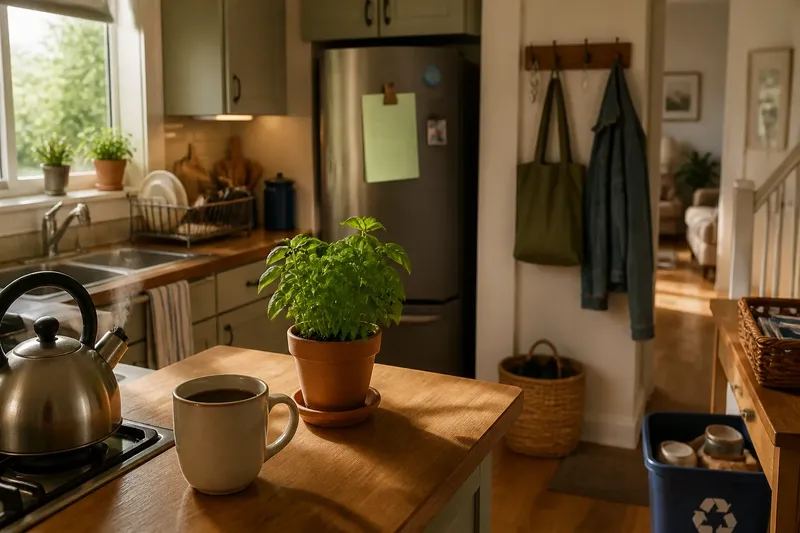
The kettle clicks off, someone pours tea, and the recycling is still beside the back door. A reliable cue for a household routine can connect that familiar moment—or a visible prompt—to a task that otherwise slips out of mind. The point is not to demand more willpower. It is to make the reminder part of a day already in motion.
Household routines often falter because a task has no clear place in time or space. “Remember to wipe the counter” asks someone to keep an unfinished intention in their head. A cue gives that intention an address: after breakfast, when the dish rack is full, or when a note appears on the cabinet. Different households need different addresses, so it helps to compare the main options before choosing one.
An existing moment makes a routine feel attached to the day
An event-based cue links a repeated task to something that already happens. The cue might be making coffee, feeding the cat, putting away a work bag, or turning off the living-room lamp. The task follows the event, rather than occupying an arbitrary time that may not fit everyone’s schedule.
This approach suits people whose days have a few dependable transitions, even if their exact hours vary. It can also work well in a shared home when the cue is visible to everyone involved. “After dinner” is more useful than “later,” but only if dinner is a recognizable moment for the people expected to act.
Choose an event that comes immediately before the task and is likely to happen on the days the routine matters. A cue separated from the action by several other activities is easy to lose. If the task is to put the lunch containers in the dishwasher, “after unpacking lunch bags” is a closer connection than “sometime before bed.”
Say a household keeps forgetting to water a small herb pot on the kitchen windowsill. Imagine the person who makes morning coffee agrees to check the soil after filling the mug, touching the soil only when the pot looks dry. The expected observable result is that the pot gets noticed during a familiar pause, without creating a new alarm or requiring every housemate to remember a separate schedule.
A visible prompt works when the cue needs to stay in sight
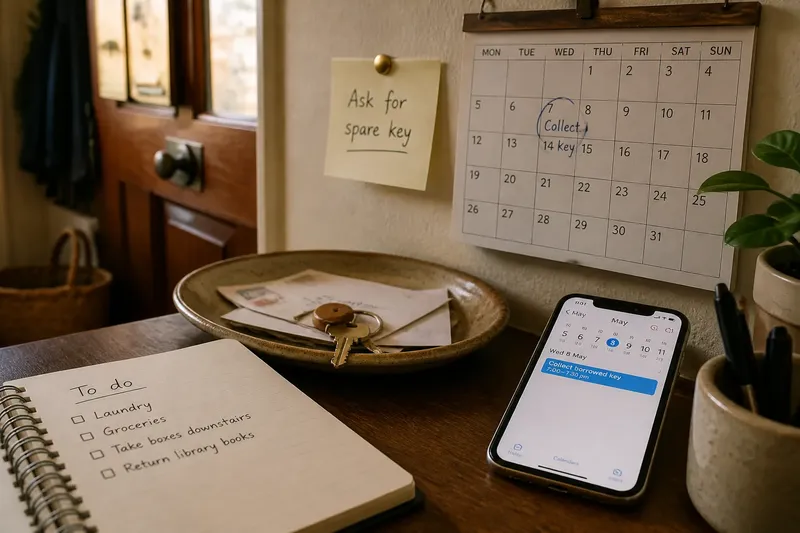
A place-based cue uses an object, note, or arrangement to make the next action hard to overlook. A small basket by the stairs can signal that items inside should travel upstairs. A dry-erase note near the front door can remind everyone to return the borrowed library books. The cue stays where the task begins or where the relevant decision happens.
This option suits households with irregular schedules, shared responsibilities, or tasks that depend on noticing a condition rather than reaching a particular hour. It can also help when one person is not present for the event that might otherwise cue the task. A note on the fridge, for instance, can remain visible to the person who arrives home later.
Keep the prompt close to the action and easy to interpret. A crowded bulletin board competes with itself; a note hidden behind a stack of mail is no longer a cue. The prompt should say what action is due, not just name a broad concern. “Put the clean towels in the hall closet” is clearer than “Laundry.”
Visible prompts have a tradeoff: familiarity can turn them into background. If a reminder has been in the same spot for so long that nobody sees it, move it nearer the point of action or change its form. Avoid adding more notes as the first response; several overlapping prompts can make it harder to tell what matters now.
A shared cue clarifies who acts without assigning a permanent monitor
Some routines belong to a household rather than one person. In that case, an event or object can signal both the task and a simple handoff. For example, a dish towel placed over the sink rail might mean that the dishwasher needs unloading before the next meal. The cue does not need to identify a particular person if the household has agreed that whoever sees it and has capacity can take the next turn.
This approach suits housemates, partners, or families who want a task to remain visible without turning one person into the household’s reminder system. It works best when the cue has one agreed meaning. If the towel is also used to dry dishes, it may not communicate anything reliably; choose a marker that is not already part of another routine.
For tasks that need a named owner, pair the cue with a clear handoff instead of expecting a visible object to settle responsibility by itself. A card clipped to the pantry can carry the name of whoever is handling the next grocery-list check. The card makes the task noticeable, while the name answers who is responsible. Keep the arrangement simple enough that updating it does not become another chore.
How do you choose a cue that fits the task and household?
Should a cue be tied to a time or an event?
Use an event when the task naturally follows a dependable activity, such as clearing the table after dinner. Use a clock reminder when a task is genuinely time-sensitive and the household can respond at that hour.
What makes a visual cue easy to notice?
Put it where the task starts, keep its message specific, and give it a distinct place rather than burying it among general notes. If people regularly pass the location without noticing it, choose a more useful spot.
How can roommates share a cue fairly?
Agree on what the cue means and whether the task belongs to everyone or to a named person. If responsibility rotates, make the current owner visible so the cue does not quietly become one roommate’s job to interpret and manage.
What if the routine is missed?
Look at the cue before blaming anyone’s motivation: it may be poorly timed, out of sight, or disconnected from the task. Adjust one part of the arrangement and see whether the next opportunity is easier to recognize.
Test the cue against ordinary interruptions
A cue should survive the actual texture of a household day. Ask whether it still works when someone comes home late, a meal happens in a different room, or a task is skipped because the needed item is unavailable. If the cue depends on one person always being present, it may be better to place a reminder where everyone can see it.
Also consider what happens when the task is already done. A useful cue should not prompt needless repetition. A note that says “check the recycling bin” leaves room to look first; “take recycling out every evening” may create an unnecessary trip when the bin is nearly empty. For tasks that depend on product labels, manufacturer instructions, or local rules, follow those directions rather than substituting a household cue.
Try one cue for one recurring task before building a larger system. Notice whether people see it, understand it, and know what to do next. If it creates confusion, change the wording or location rather than adding a second reminder on top of the first.
Keep the cue small enough to maintain
Reliable cues are not elaborate household infrastructure. A marked spot for keys, a hook for a reusable grocery bag, or a short note beside the washing machine may be enough. The best choice is the one people can preserve without someone being appointed to police it.
When selecting a reliable cue for a household routine, match the prompt to the task’s natural trigger: use an existing moment for an action that follows a daily event, a visible marker for something people need to notice, and a shared handoff when ownership is unclear. Then leave room to revise it as the household’s patterns change. A cue earns its place when it quietly helps the next action become obvious.